
Home / WHAT TO SEE /Christian Museum of the Dome
Christian Museum of the Dome
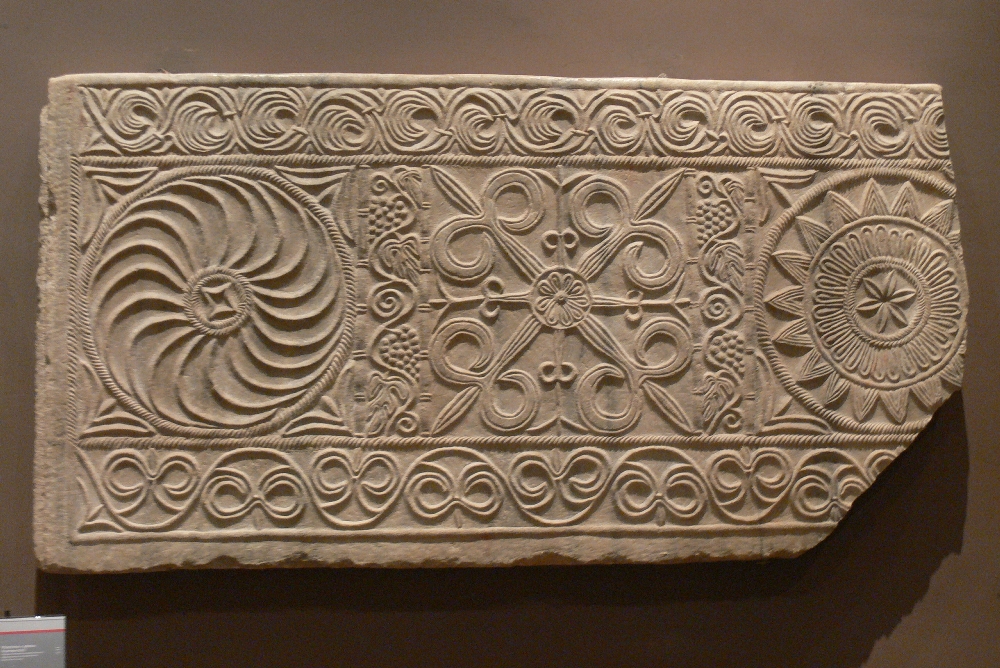
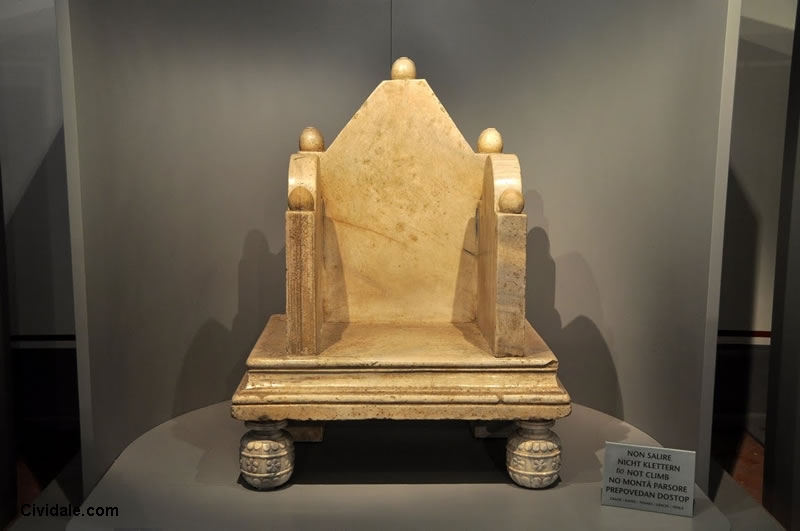
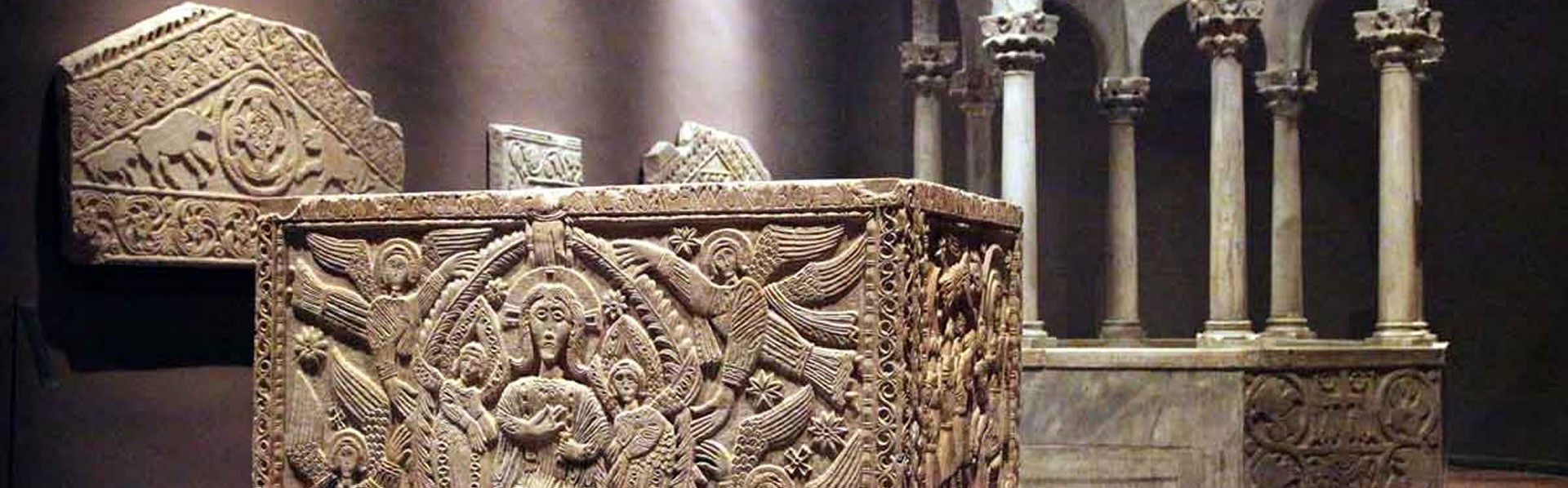
Placed inside the Dome, in a rectangular space between the courtyard and the right wall of the museum, it collects some of the most representative objects of the medioeval high sculpture, mainly belonging to the Longobarda's age.
Altare del Duca Rachtis
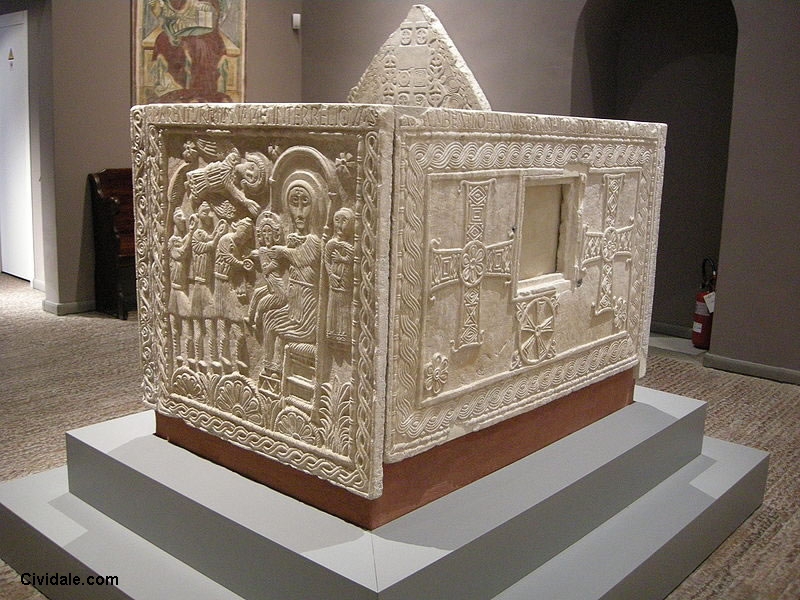
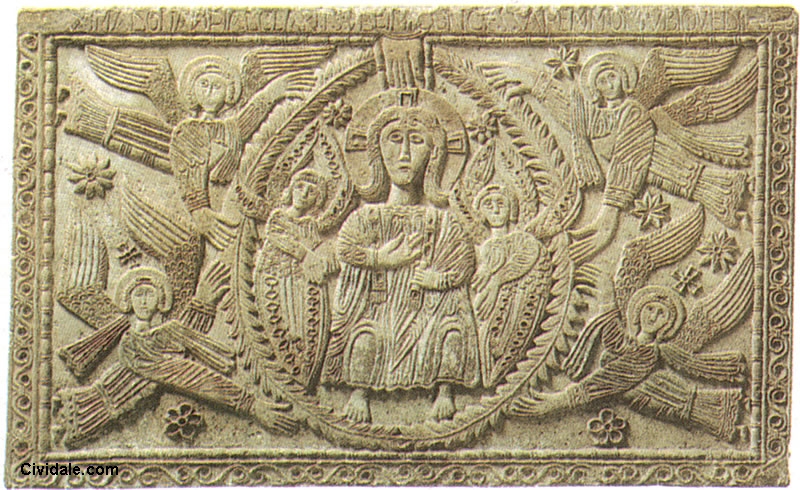
The adoration of Magi the stone's Altar, or Ratchis'Altar is the most important monument of this sculpture. In the frontal side it is represented Christ on the throne between two cherubs, within an almond supported by four angels; the two lateral sides contain the Visitatione with the Vergine and S. Elisabetta in the action of embracing themselves and the Adoration of the Magi with the Vergine on the throne with the Son on her lap; in the back side, decorated with
Maiestas Domini, rilievo dell'Altare del Duca Rachtis
Crosses and geometric figures, there is a window corresponding to the reliquary's opening. On the upper part of the front side and of the other three sides that form the Altar, run all around an inscription, a time colored in minium: it assures that the dating of the work is between the years 737 and 744, in the period between the election of Ratchis first to duca of the Friuli, and then to king of the Longobardo Reign. The figures, the harmony and the equilibrium all the objects are disposed with in the scenary, are tied to modules bizantini and ravennati, while geometric assonances of the East are reflected in particular in the vegetables and flowered decorations.
The Ara del Duca Rachtis, visitatione of the Magi Ara of the Duca Rachtis, Christ in Gloria, all these representations finds actions in the mentality of the artist or of the group of artists, they find inspiration widely in the barbaric cultural, expressing itself with a primitive technique, they distroy the physical shapes in the attempt to recover the ancient models of the figured sculpture to high relief.
Battistero ottagonale di Callisto
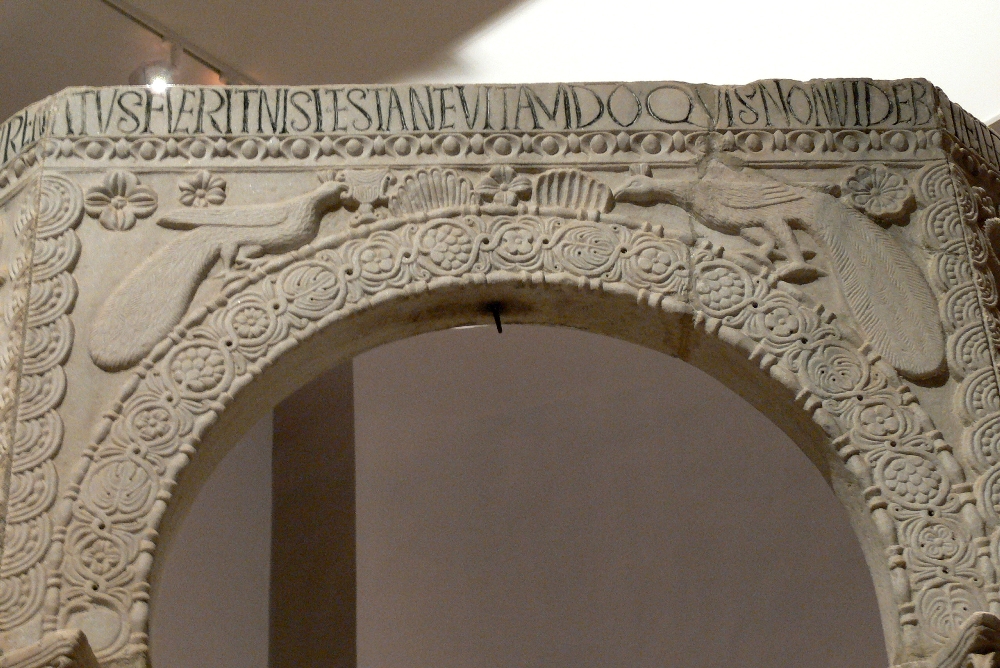
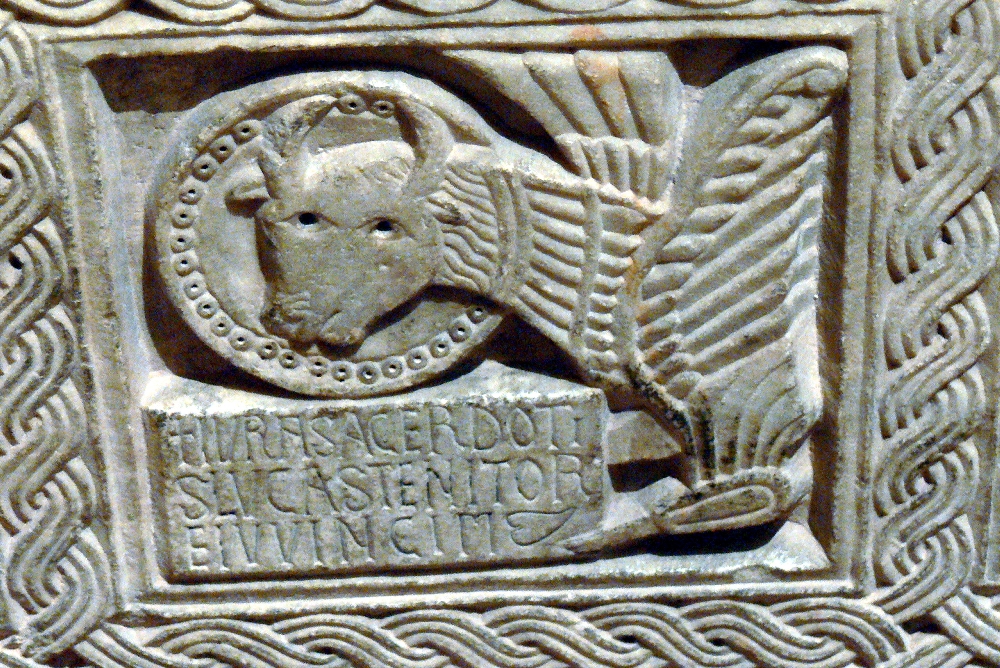
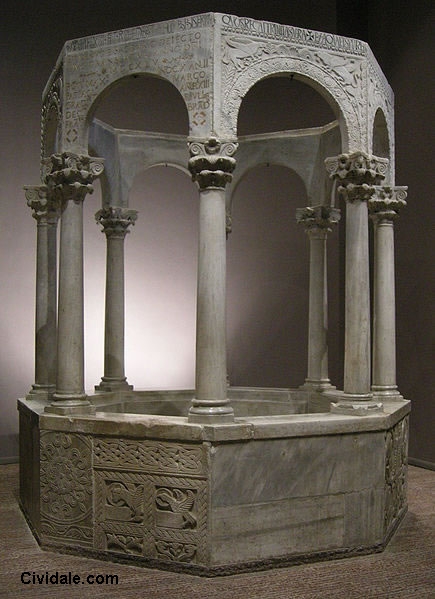
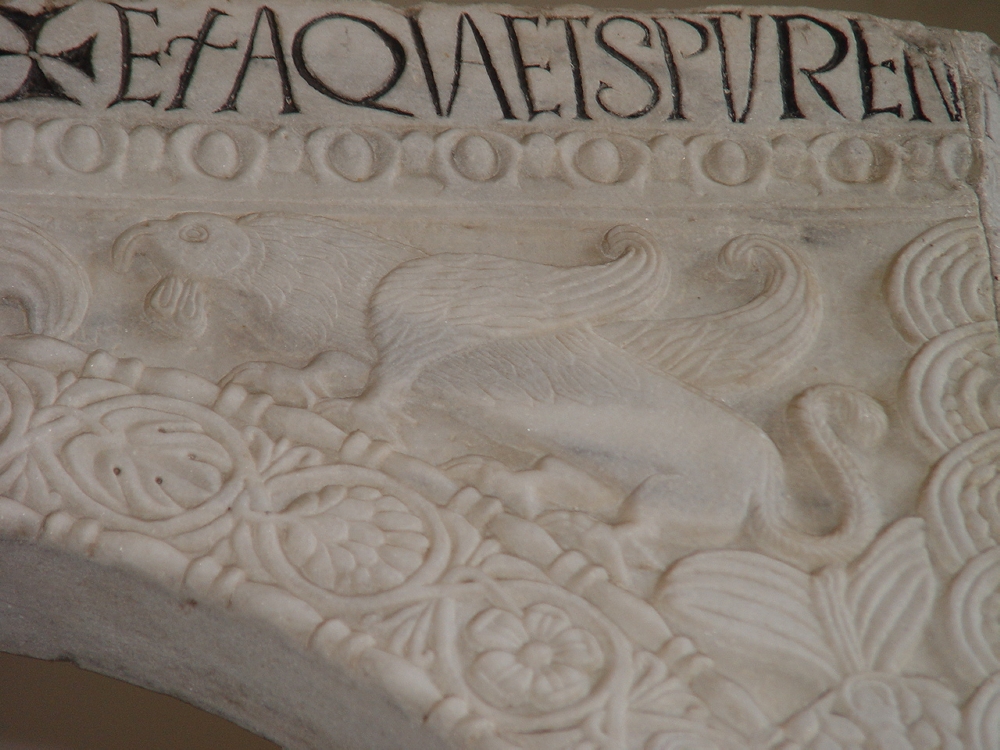
The other great monument placed in the Christian Museum is the Baptistry, or Callisto's Baptistery, formed by an octagon with seven original bows and an unoriginal one, supported by eight columns in a balustrade in which there are fragments of plutei of medioevale age. The baptismal basin originally was placed in front of the Basilica in the baptismal church dedicated to S. Giovanni built by the Patriarch Callisto in the XI century where the ancient baptistry was originally placed. The decoration of the bows is very light and very much remarkable the symbolic carved animals. From a stilistyc side capitals are perfect (much similar to those of the Tempietto di S.Maria inValle) in acanthus leaves, probably from the V-VI century and reused. All over the arch run around an inscription that testifies the age of the construction of the bows after the years of the takeover of Patriarch Callisto, takeover of Patriarch Callisto, coming from Cormòns (737-756) in Cividale. In the Baptistry we can find models and influences from classics, bizantini and oriental; the geometric decoration dominates but it is possible to find traces of classicism and a recall to naturalism. In the composition it is very important the group of vegetables and fantastic animals coming from the Eastern art that, belonging to a culture that did not love to represent the human figure, it influenced negatively the laborious western process of figurative sculpture, an example of which or attempt of great value had been realized before the Tegurio callistino, in the Altar of Ratchis. In one side of the octagonal parapet of the Baptistry one can see the pluteo of Sigualdo, originally owned by the church of S. Giovanni Baptist and dedicated - as it appears in the inscription of the central side- to Patriarch Sigualdo successor of Callisto (756-786).In the four round placed in the corners there are represented the four Evangelists, each of them with an expalnation, and in the two central squares a Latin cross with rosettes, palms and candle holders (upper side), a tree of the life with lion's head, doves and snouts (down side). The symbols of the Evangelists at half body, that hold the tablets with his own inscriptions, are freely represented without any reference to the single nature of the animals (Eagle, ox, lion), while the face of the Angel as a pear upsidedown strongly recalls the representations of the Altar of Ratchis. In the decoration prevail and modules with geometric figures and animals coming from the Eastern art. Before leaving the Museum Christian, one can admire other fragments of altomedioevale sculpture, such as some interesting timpani of Ciborio coming from the Tempietto.
Testi tratti dalla guida" CIVIDALE del Friuli, introduzione e guida ai monumenti e all'arte della città ducale" di AMELIO TAGLIAFERRI
INFORMAZIONI E ORARI
MUSEO CRISTIANO e TESORO DEL DUOMO
Via G.B. Candotti, 1 – 33043 Cividale del Friuli ( UD)
tel. biglietteria +39 (0)432 730403 cell. prenotazioni +39 349 3541668
www.mucris.com