

2026
Mittelfest 2026 PAURA
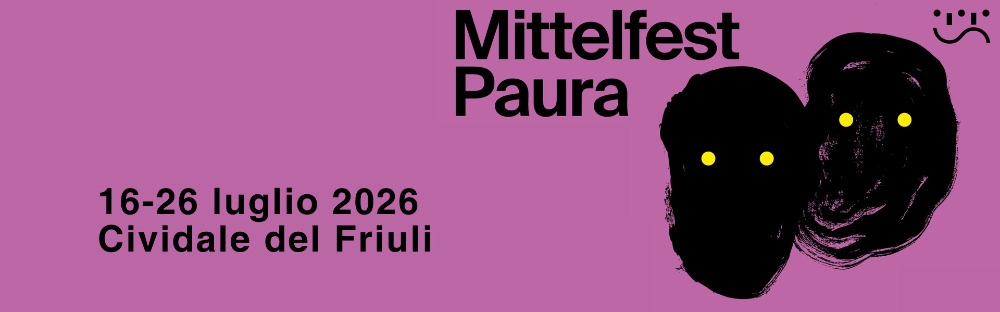
It is said that deep in the abyss, beneath the frozen earth and rocks, in a network of caves and tunnels, lived two sisters, each with one eye, who exchanged eyes to see. It is said that as one handed it over to the other, Perseus, shrouded in darkness, reached out and stole the eye with him. And from the depths he reached unknown, dense cliffs and dark forests, and crossed seas and deserts, until he reached the home of the Gorgons. There, an immense silence reigned, and a vast multitude of men and animals, all turned to stone, terrified by Medusa's gaze. Perseus blindfolded himself to hide the fear from his eyes. He would walk through that cemetery of statues, orienting himself with the eye stolen from the two sisters. And he would find Medusa, absorbed in sleep, quiet with her head of repulsive serpents. And, it is said, without seeing her, he severed her head from her neck.
continue reading
Then the first miracle occurred: two horses were born immediately, one of them winged, Pegasus. It is then said that Perseus, riding Pegasus, stopped on the shores of the sea, washed his victorious hands, and, so that the sand would not ruin the severed head, softened it with leaves and sea rushes. On top of it he placed the head of Medusa with her fearsome serpents. Then the second miracle occurred: the blood, still pouring from her head, reduced the leaves to dust, while it gave the sea rushes an unknown rigidity, transforming them into coral. It is said ever since that the blood of the hideous Medusa can transform what lies inert in the water into precious coral, or what rests on the ground into hard stone and dust.
So it is with fear: it lies entirely in expectations, in what one imagines will be. Fear is the primary emotion that anticipates events, not follows them. It is already there. It arrives and indicates the route, as in the allusive geography of myth. Yet, while it foresees succumbing to every fatal challenge, it also anticipates its outcome. It is enough to go beyond what the eyes believe. Because sight is often a deceiver: it does not notice what lies before it, but what the mind already expects. The gaze, it is said, registers only the differences.
Our story, then, can be similar to that of Perseus: not giving in to Medusa's gaze, not turning to stone before the terror we already know, before what the mind fears will happen. Instead, shielded by a stolen eye, leaving our fearful gaze closed, we can return victorious, astride our Pegasus, laden with precious corals.
Will it happen? Who knows: if, as we observe things, we began to see them with new tools and different eyes, perhaps some benevolent surprise awaits us. If the fear lurking in our thoughts were overcome by our actions, perhaps some miracle would unfold. Instead of running away from it, why not follow every fear to where it pushes us? Why not accept its adventures? Perhaps we will obtain stones, perhaps coral.
Giacomo Pedini
Artistic Director, Mittelfest
- NEWS ARCHIVE
- share: